Launch offer — valid today only

📄 Digital book in PDF · read it on your phone or print it

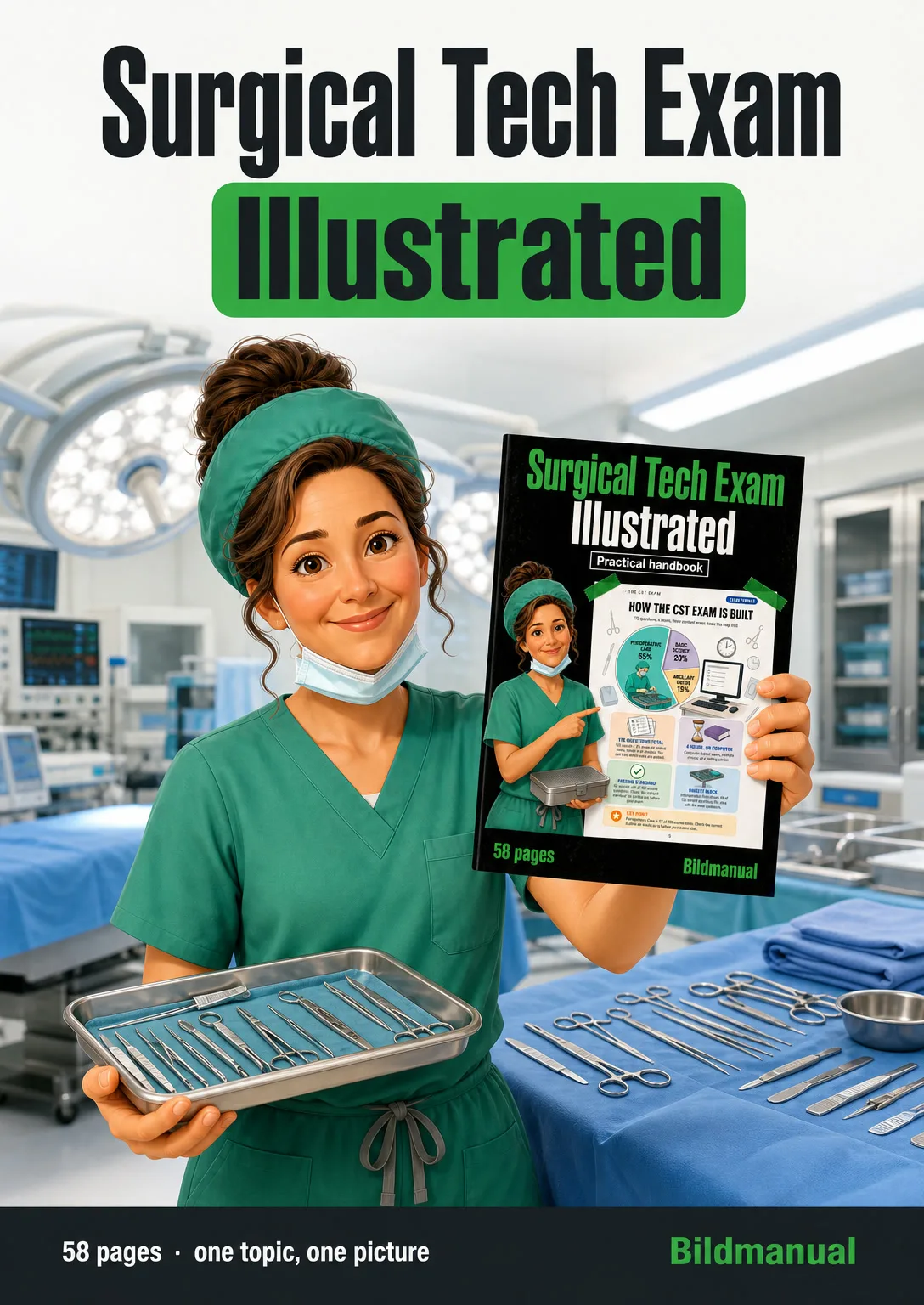
The CST Exam, Illustrated Every Instrument, Rule and Number on Its Own Page

For the NBSTSA CST exam. One topic per page: the drawing first, then what you need to remember. From Kelly vs Crile vs mosquito to the back table, the count and steam sterilization numbers. 58 illustrated pages.

I WANT THE ILLUSTRATED CST BOOK

🔒 Secure checkout · PDF by email · 30-day guarantee

Every topic, its own pageEach instrument and each sterile-field rule drawn, with the explanation right beside it
58 illustrated pages9 parts, from how the CST exam is built to the last-week checklist
Up-to-date sourcesNBSTSA CST content outline, AST Guidelines for Best Practices and the Joint Commission Universal Protocol
PDF by emailFormat

Look Inside the Book

Every page has one big drawing and a box with the parts, rules and numbers you need to know:

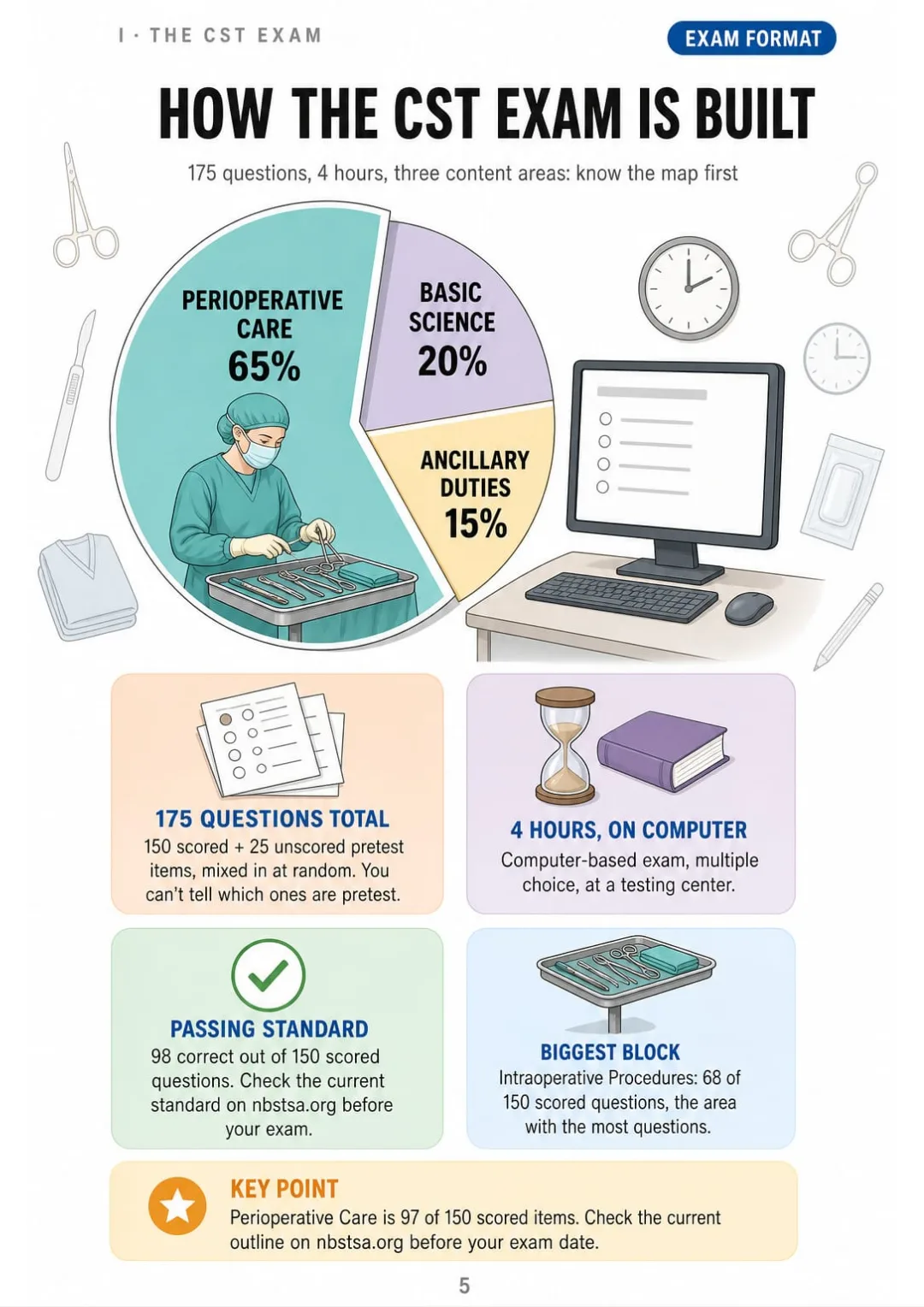
175 questions, 150 scored, 4 hours: Perioperative Care 65%, Basic Science 20%, Ancillary Duties 15%.
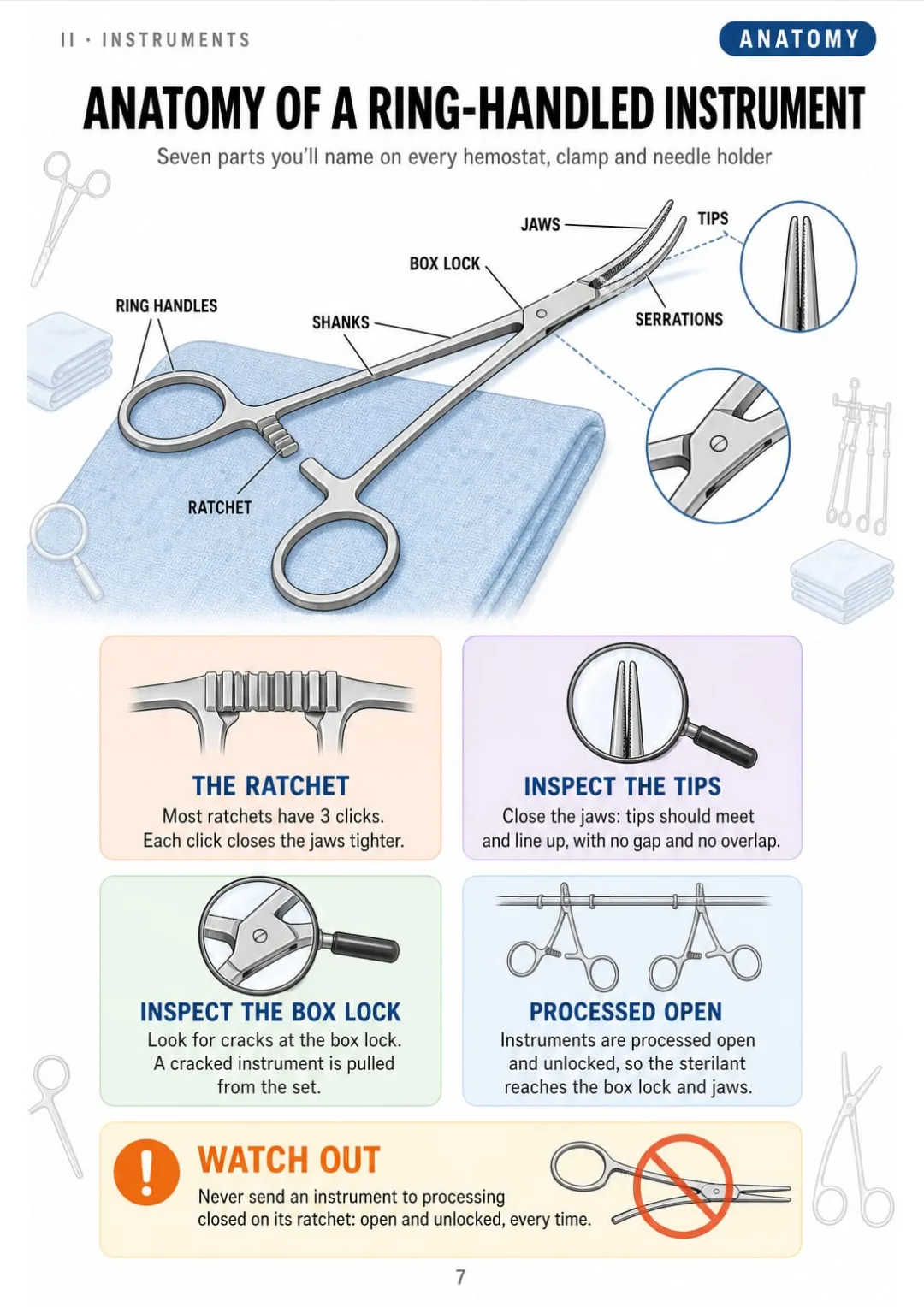
Ring handles, ratchet, shanks, box lock, jaws, serrations, tips: all labeled on one drawing.
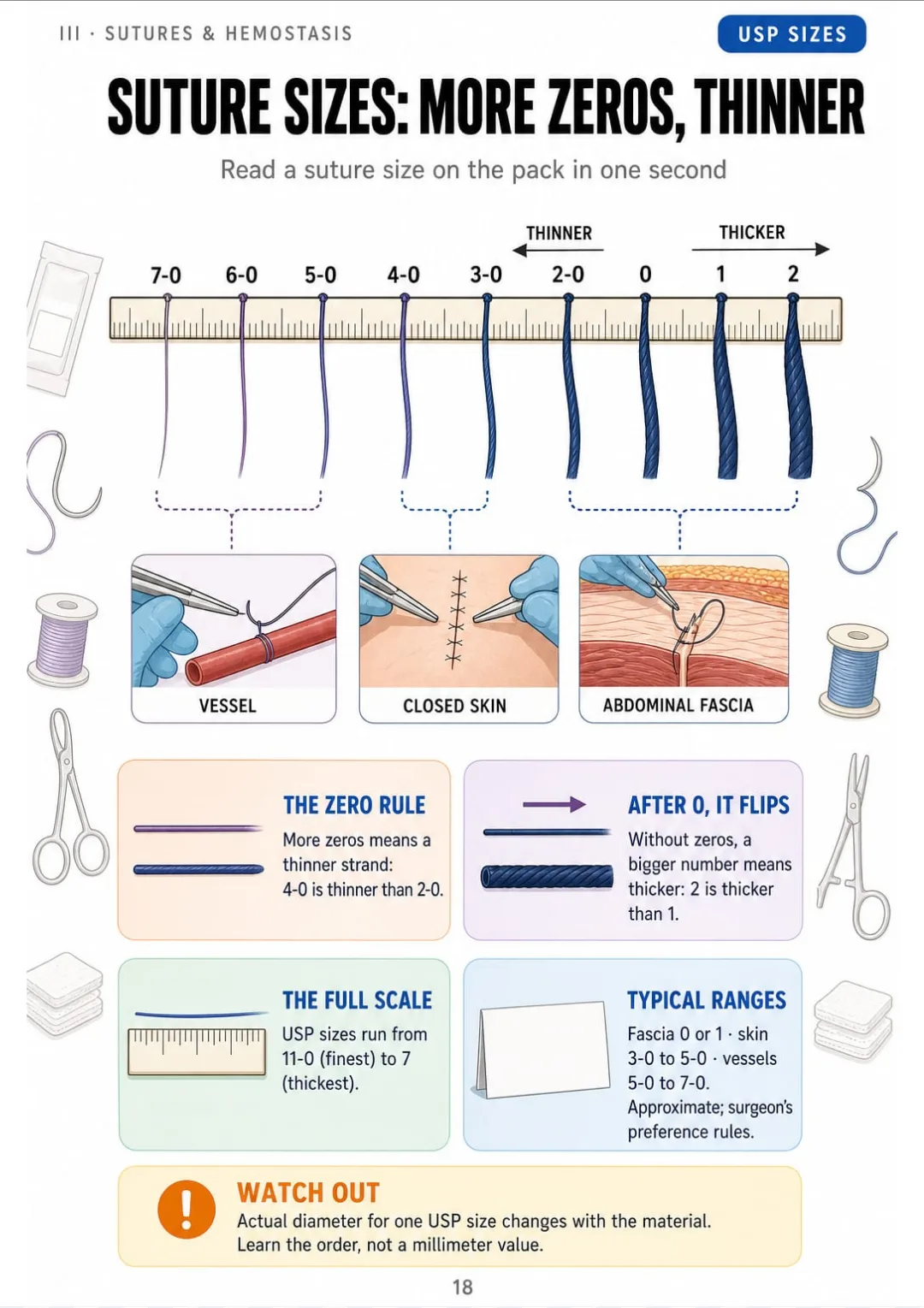
USP suture sizes from 7-0 to 2 on one ruler: more zeros, thinner.
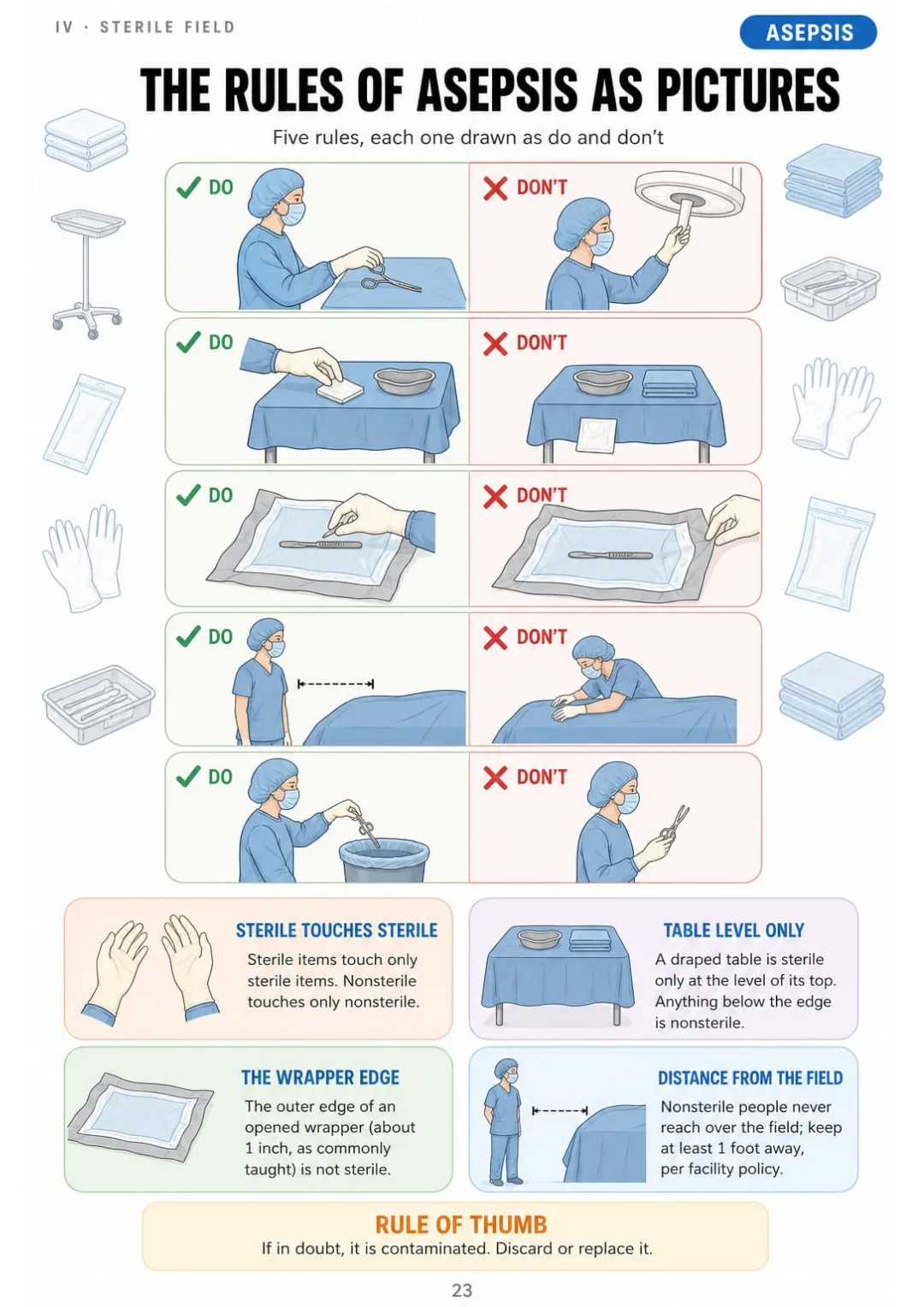
Sterile only at table level, wrapper edge not sterile, if in doubt it's out.
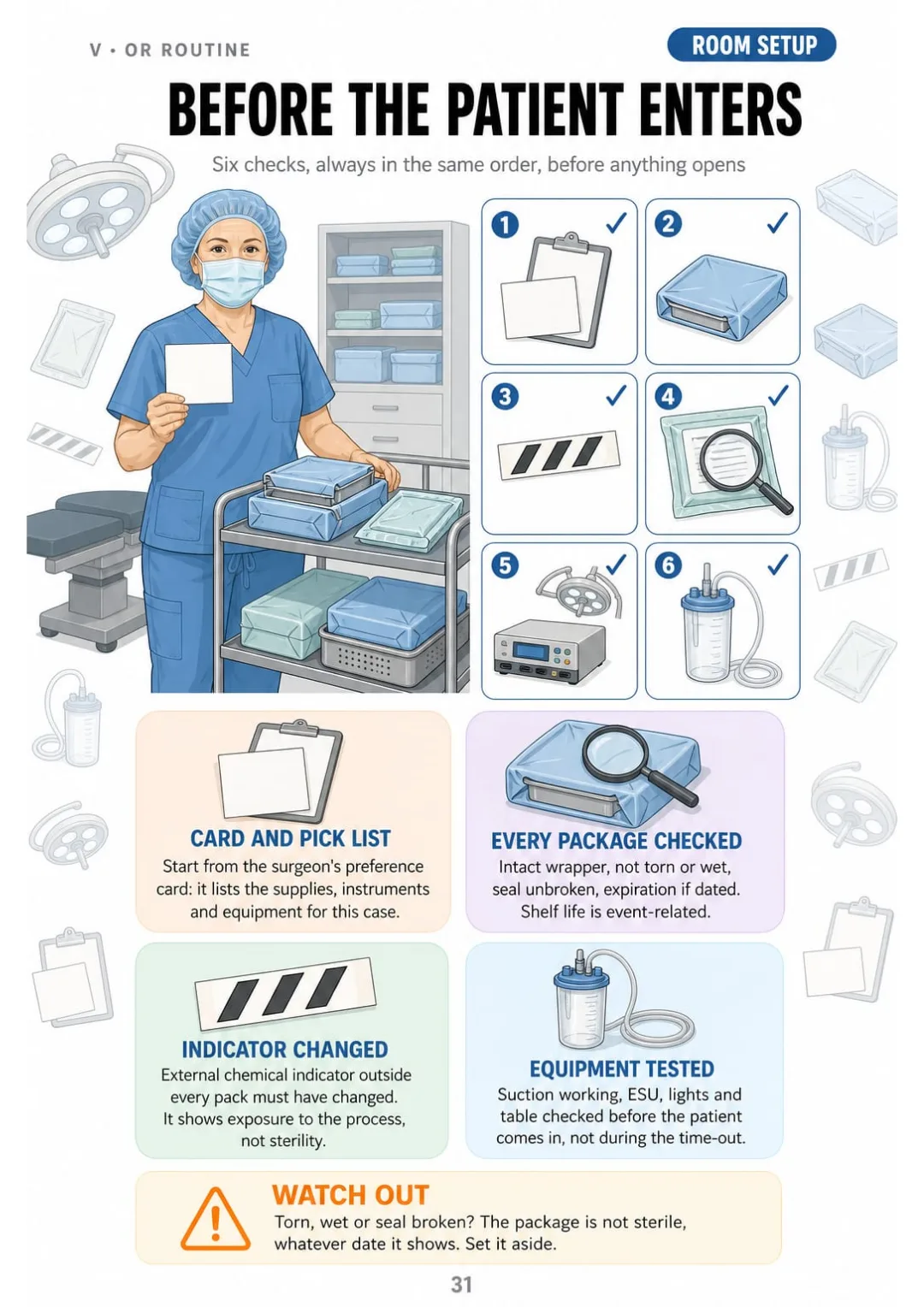
Preference card, intact wrapper, indicator changed, suction working: the 6-box checklist.
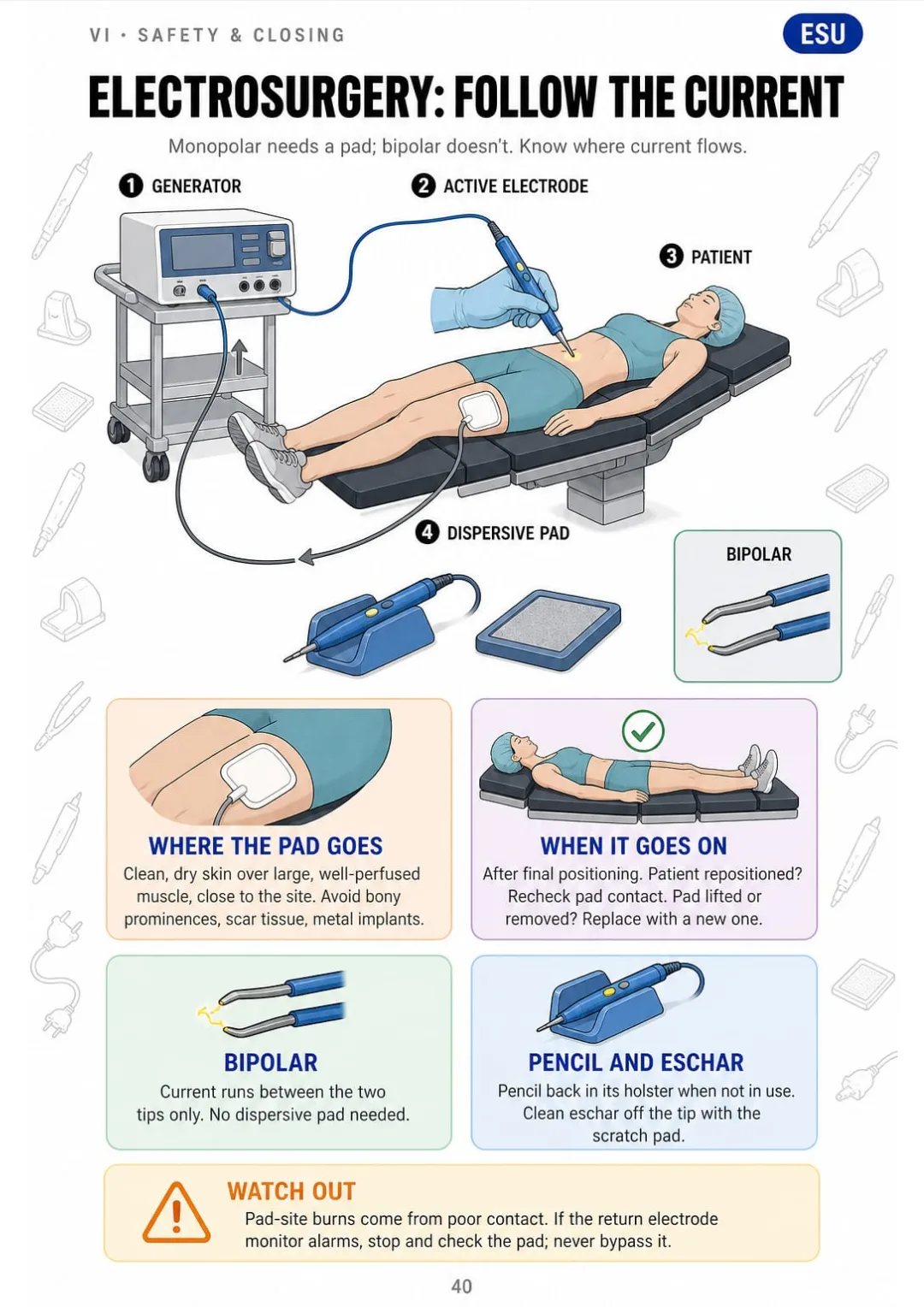
Monopolar: generator → pencil → patient → pad → generator. Bipolar: no pad.
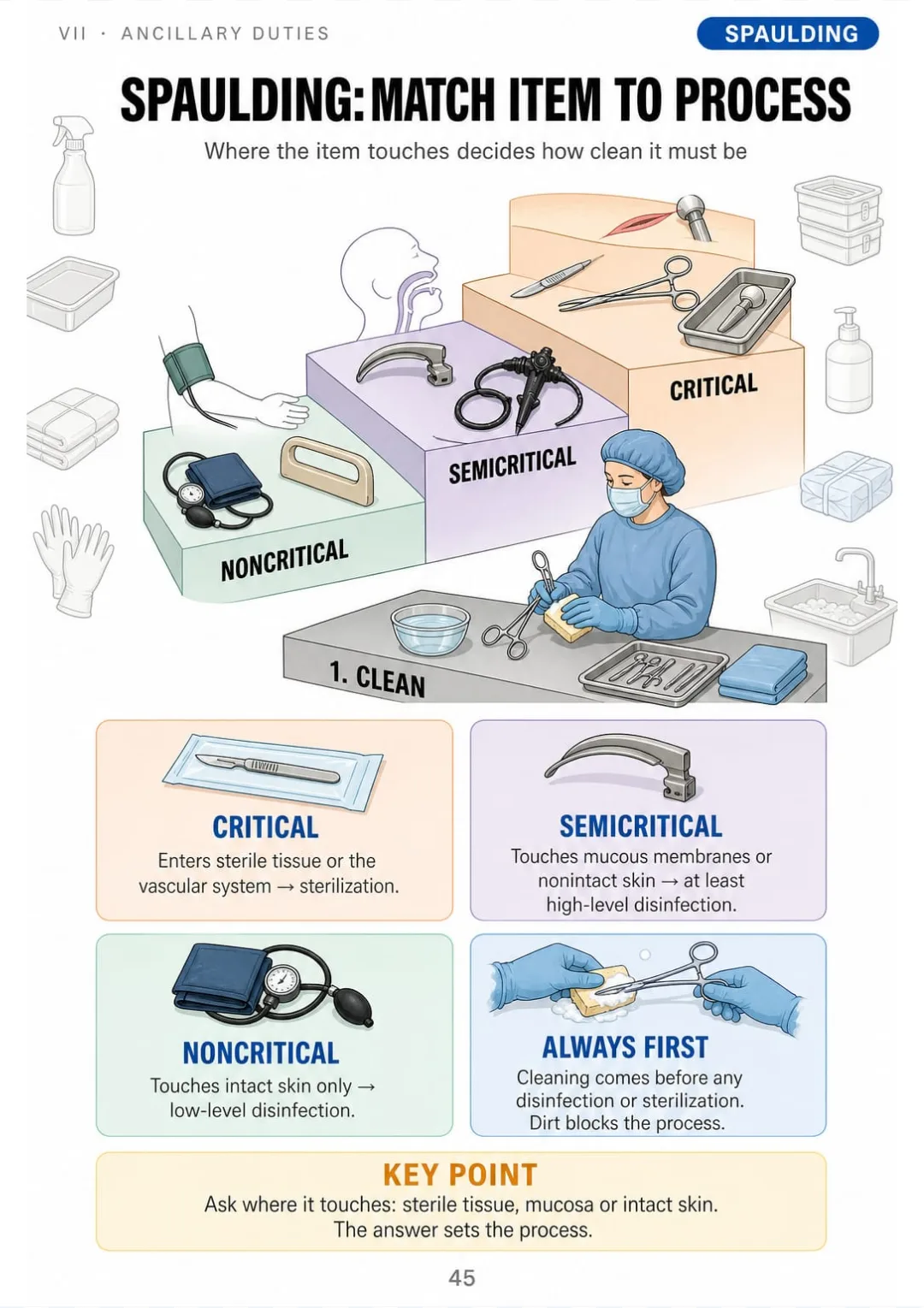
Spaulding: critical → sterilize · semicritical → high-level disinfection · noncritical → low-level disinfection
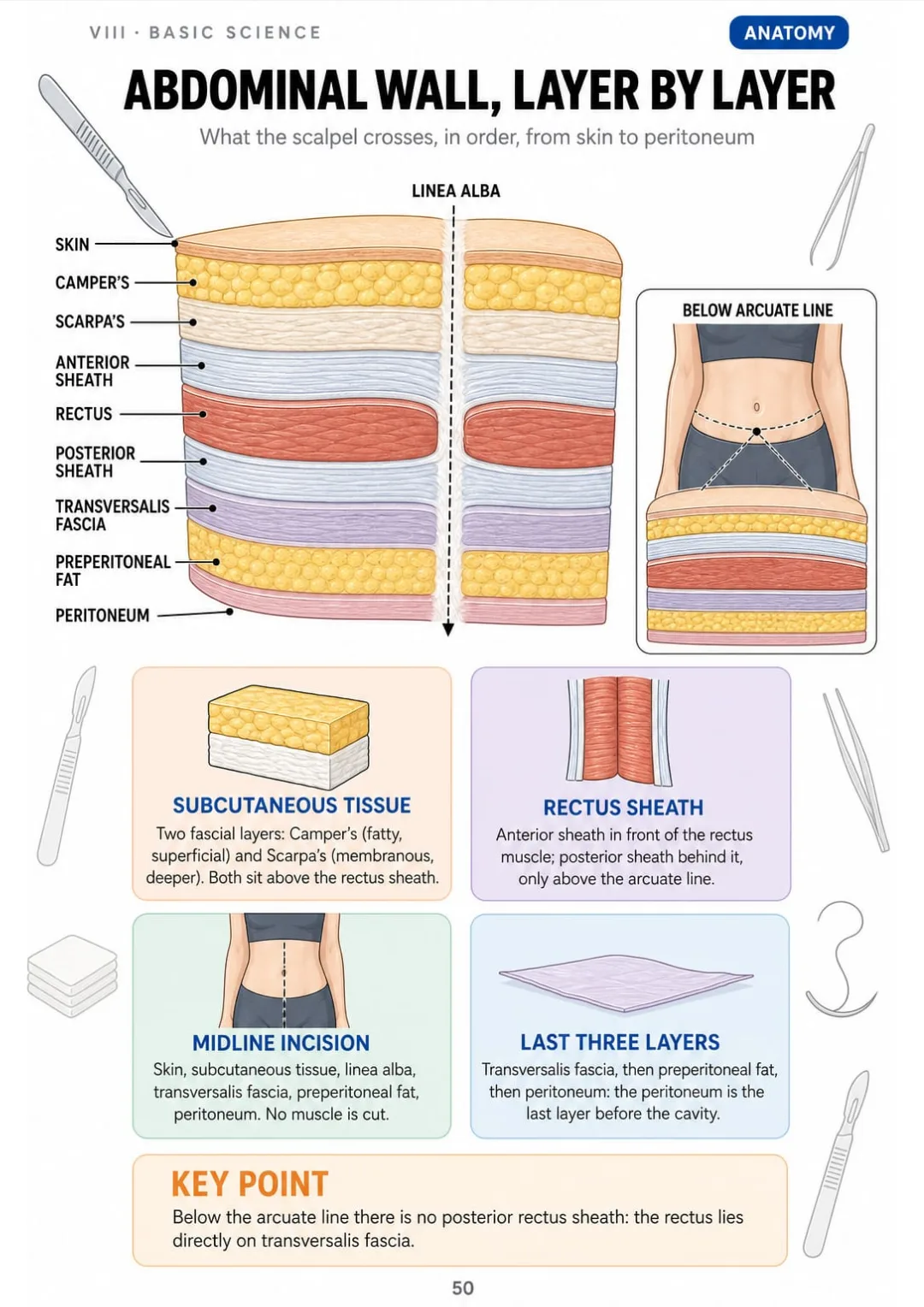
9 layers from skin to peritoneum, and why a midline cut goes through the linea alba

Swipe to see more →

These are real pages from the book. The table of contents is the full one: 9 parts and 54 topics.

The Problem Isn't You. It's How It Was Explained to You.

You're opening sutures for closing. The surgeon says "3-0 for the subcutaneous," and there's a 0 and a 3-0 in front of you. For a second, you're not sure which one is thinner.

Your textbook covers USP sizes in two dense paragraphs: diameters, numbering, exceptions. You read it, it made sense, and by the next morning the zeros were a blur again.

USP suture sizes from 7-0 to 2 on one ruler: more zeros, thinner.

In this book, suture sizes are one page: a single ruler from 7-0 to 2, thinnest to thickest, with one rule written big across the top: more zeros, thinner.

Same with ring-handled instrument anatomy, Kelly vs Crile vs mosquito, the rules of asepsis, the back table and steam sterilization numbers: each one has its own page.

So the next time someone asks for a size, you picture the ruler and hand it over without going back to the textbook.

COMPARE FOR YOURSELF

Same Topic, Two Ways to Study It

THIS
  • The textbook: line after line
  • Instrument parts explained only in words
  • You walk into the exam with doubts
Ring-handled instruments, a category that includes hemostatic clamps, needle holders and many types of scissors, share a common structural configuration. Proximally, the finger rings allow the user to manipulate the instrument, while the ratchet, located adjacent to the rings, permits the jaws to be locked at progressive degrees of closure. The shanks extend distally from the ratchet to the box lock, the articulating joint at which the two halves are joined. Distal to the box lock, the jaws may present transverse or longitudinal serrations, terminating at the tips.
FOR THIS
  • The whole instrument in one drawing
  • Every part labeled in a box
  • You see it and you get it
Ring handles, ratchet, shanks, box lock, jaws, serrations, tips: all labeled on one drawing.
CONTENTS

Take a Look at the 9 Parts and 54 Topics

The CST exam, instruments, sutures and hemostasis, the sterile field, the pre- and intraoperative routine, safety and closing, sterilization and the OR team, basic science and a final review: 58 pages, all illustrated.

IThe CST Exam at a Glance · pp. 5-6
  1. How the CST exam is built
  2. How to study with one page at a time
IIInstruments: Name Every Part · pp. 7-17
  1. Anatomy of a ring-handled instrument
  2. The 7 instrument families by function
  3. Scalpel handles and blades
  4. Scissors: Mayo vs Metzenbaum
  5. Kelly, Crile, mosquito: tell them apart
  6. Toothed and grasping clamps
  7. Tissue forceps: teeth or no teeth
  8. Needle holders and how to load them
  9. Handheld retractors
  10. Self-retaining retractors
  11. Suction tips
IIISutures, Needles and Hemostasis · pp. 18-22
  1. Suture sizes: more zeros, thinner
  2. Absorbable vs nonabsorbable
  3. Needle anatomy and points
  4. Ties, ligatures, clips and staplers
  5. Hemostasis on the field
IVThe Sterile Field · pp. 23-30
  1. The rules of asepsis as pictures
  2. The sterile zones of your gown
  3. Moving around the field
  4. Opening packs and pouring solutions
  5. The surgical hand scrub
  6. Gowning and closed gloving yourself
  7. Gowning and gloving the surgeon
  8. Contamination: what to do
VPreoperative and Intraoperative Routine · pp. 31-39
  1. Before the patient enters
  2. The back table in the same order
  3. The Mayo stand
  4. The surgical count
  5. Time-out and Universal Protocol
  6. Positioning: supine and its variants
  7. Positioning: lithotomy, prone and lateral
  8. Skin prep and draping
  9. Passing and anticipating
VISafety, Specimens and Closing · pp. 40-44
  1. Electrosurgery safety
  2. Fire in the OR: the triangle
  3. Specimen handling
  4. Wound classes and healing
  5. Closing, dressing and breakdown
VIIAncillary Duties: Sterilization and the OR Team · pp. 45-49
  1. Cleaning, disinfection, sterilization
  2. Steam sterilization numbers
  3. Low-temperature methods
  4. Indicators: chemical vs biological
  5. The OR team and legal terms
VIIIBasic Science · pp. 50-55
  1. Layers of the abdominal wall
  2. Common incisions on one body
  3. Microbiology for the OR
  4. Anesthesia types and phases
  5. Medications on the sterile field
  6. Malignant hyperthermia and dose math practice
IXFinal Review · pp. 56-58
  1. Exam-style questions: instruments and sterile field
  2. Exam-style questions: counts, sterilization, safety
  3. Last-week checklist and common mix-ups

One Page, One Topic, All Clear

Think of it this way:

You're in clinicals. The surgeon asks for a Crile, and on the Mayo stand a Kelly and a mosquito sit right next to it.

In the book you open the Kelly, Crile, mosquito page and see the three clamps drawn side by side, at the same scale, with how far the serrations run and how big each one is.

Preference card, intact wrapper, indicator changed, suction working: the 6-box checklist.

Same with suture sizes, the sterile zones of your gown, the surgical count, positioning and steam sterilization numbers: each one on its own page.

Surgical Tech Exam Illustrated is 9 parts and 54 topics, all drawn, and at the end, exam-style questions with explanations and a last-week checklist.

What you see drawn, you don't have to memorize.

What's Inside Surgical Tech Exam Illustrated:

Ipp. 5-6

The CST Exam at a Glance

How the CST exam is built (175 questions, 150 scored, three content areas) and how to study one page at a time.

IIpp. 7-17

Instruments: Name Every Part

Ring-handled instrument anatomy, the 7 families, scalpel blades, scissors, clamps, tissue forceps, needle holders, retractors and suction tips: you name what's on the Mayo stand by its shape.

IIIpp. 18-22

Sutures, Needles and Hemostasis

Suture sizes, absorbable vs nonabsorbable, needle anatomy and points, ties, clips, staplers and hemostasis on the field.

IVpp. 23-30

The Sterile Field

The rules of asepsis as pictures, the sterile zones of your gown, moving around the field, opening packs, the hand scrub, gowning, gloving and contamination: you know what's in and what's out before anyone has to say it.

Vpp. 31-39

Preoperative and Intraoperative Routine

Room setup, the back table, the Mayo stand, the count, time-out, positioning, skin prep, draping and passing instruments.

VIpp. 40-44

Safety, Specimens and Closing

Electrosurgery, fire in the OR, specimens, wound classes, closing, dressing and breakdown.

VIIpp. 45-49

Ancillary Duties: Sterilization and the OR Team

Cleaning, disinfection and sterilization, steam numbers, low-temperature methods, chemical vs biological indicators, the OR team and legal terms.

VIIIpp. 50-55

Basic Science

Abdominal wall layers, common incisions, microbiology, anesthesia, medications on the sterile field and malignant hyperthermia.

IXpp. 56-58

Final Review

Exam-style questions with explanations, a last-week checklist and the most common mix-ups.

At the end of the book: Exam-style questions with explanations, a last-week checklist and the most common mix-ups.
Plus: 2 Free Books

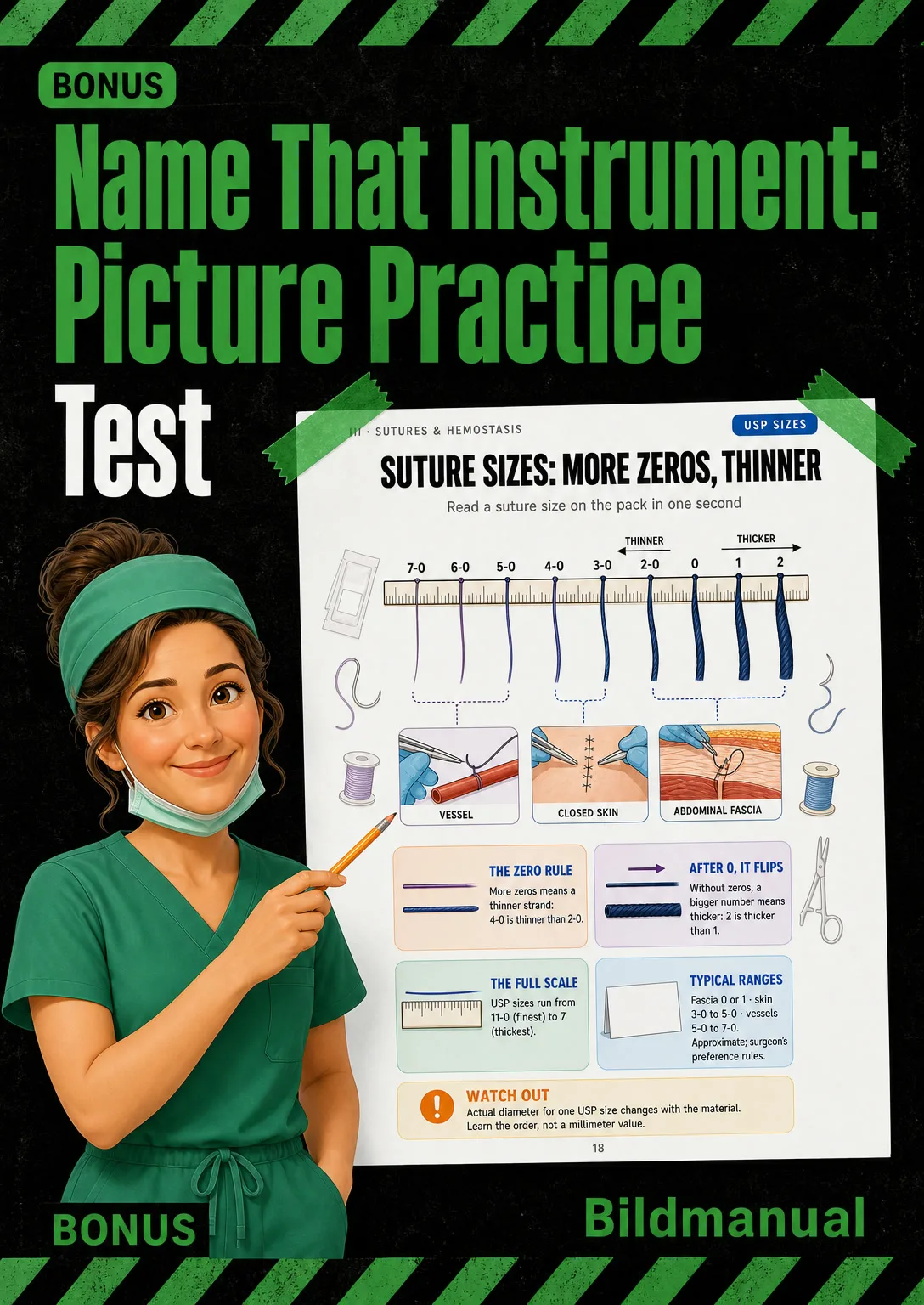
Name That Instrument: Picture Practice Test

BONUS 1: «Name That Instrument: Picture Practice Test»

Value on its own: US$ 17.90

You see a drawing, you name the instrument and its use, then check the answer: the fastest way to find out which ones you really know.

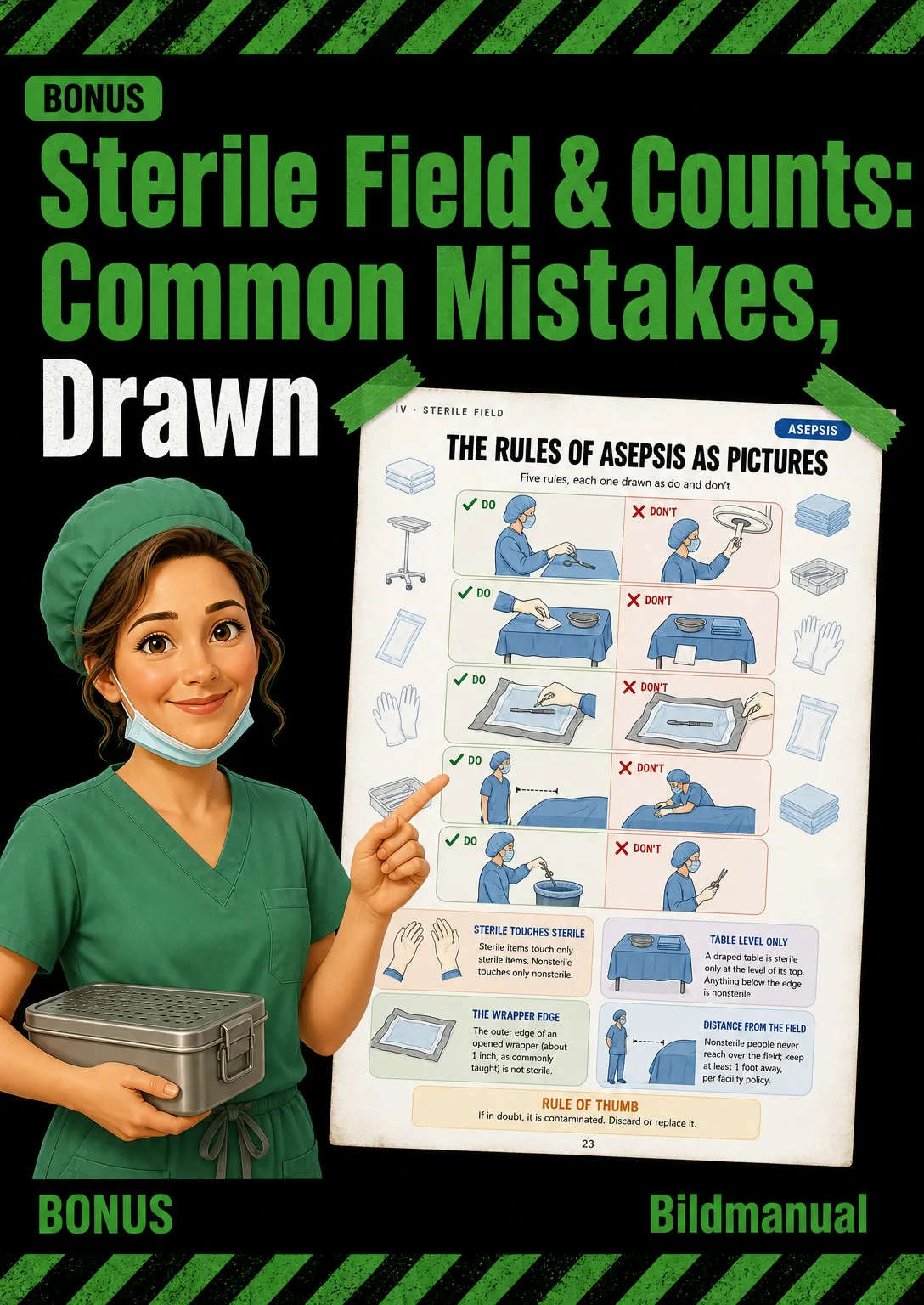
Sterile Field & Counts: Common Mistakes, Drawn

BONUS 2: «Sterile Field & Counts: Common Mistakes, Drawn»

Value on its own: US$ 14.90

The most frequent errors with gowns, gloves, the back table and counts, each one drawn next to the right way, for a quick review before clinicals or the exam.

Surgical Tech Exam Illustrated with 2 Free Books

  • Surgical Tech Exam Illustrated: 58 illustrated pagesUS$ 63
  • BONUS 1: Name That Instrument: Picture Practice TestUS$ 17.90
  • BONUS 2: Sterile Field & Counts: Common Mistakes, DrawnUS$ 14.90
  • High-resolution PDF to printIncluded
Total value US$ 95.80
YOUR PRICE:
US$ 27
You save US$ 68.80
YES, I WANT SURGICAL TECH EXAM ILLUSTRATED FOR US$ 27

📄 This is a digital PDF book sent to your email: nothing is printed or shipped.

Secure purchaseEncrypted payment30-day guarantee

PDF by email: We email you Surgical Tech Exam Illustrated as a PDF, together with the two free books. It's a single payment: no installments, no extra charges.

Who This Book Is For

You're in a surgical technology program

You're in a surgical technology program

Each instrument family on its own page, every part labeled, so the names stick before clinicals start.

Your CST exam date is set

Your CST exam date is set

The book follows the NBSTSA content outline, so you review each area in proportion, with exam-style questions at the end.

You already work in the OR

You already work in the OR

Keep it at hand to check a setup, a suture size or a sterilization number at a glance.

Everything You Get Today

US$ 95.80US$ 27
YES, I WANT SURGICAL TECH EXAM ILLUSTRATED FOR US$ 27

📄 This is a digital PDF book sent to your email: nothing is printed or shipped.

30DAYS
GUARANTEE

30-Day Guarantee

Try Surgical Tech Exam Illustrated for 30 days, bonus books included.

We refund everything if the file won't open, if the book isn't what you see here, if you were charged twice or if the email doesn't arrive. Just email us.

You pay once. No subscriptions.

Frequently Asked Questions

Is it for me if I'm already in clinicals or retaking the exam?

Yes. It isn't a beginner's book. Your textbook explains and your question app tests you; this book is the part in between: each instrument, rule and number drawn on its own page, in the order of the NBSTSA outline, so you can review an area in minutes and check a doubt at a glance. It works whether you're in the program, in clinicals or preparing a retake.

Where does the content come from?

From the current NBSTSA CST Examination Content Outline (the one published on nbstsa.org), cross-checked with the AST Guidelines for Best Practices and the Joint Commission Universal Protocol. The book follows the outline's three content areas, in its order.

Is it official material?

No. It's independent study material, not published or endorsed by the NBSTSA, the AST or any program. It doesn't give a certificate or CE credits: it's a book to study and review.

Does it replace my program or clinical training?

No. It's a study companion. Your program, your preceptors and your facility's protocols always come first.

Are the practice questions the real exam questions?

No. They're written for this book, in the style of the exam, so you can practice. They aren't official NBSTSA questions.

When and how do I get it?

The book and the 2 bonus books arrive as PDFs by email, at the address you enter at checkout.

Do I have to pay every month?

No. It's a one-time payment.

Can I have it on paper?

Yes. The PDF is printable: print the whole book at home or at a print shop, or just the pages you need.

How does the refund work?

You have 30 days. We refund everything if the file won't open, if the book isn't what you see on this page, if you were charged twice or if the email doesn't arrive: just email us.

Before You Close This Page

No more rereading with nothing sticking.

A Kelly, a Crile and a mosquito: you see them drawn side by side, and you can tell them apart.

You walk into the exam knowing where everything is.

Drawings make studying faster.

The book is right below.

One-time payment: US$ 27 · Guarantee: 30 days · PDF by email

YES, I WANT SURGICAL TECH EXAM ILLUSTRATED FOR US$ 27

📄 This is a digital PDF book sent to your email: nothing is printed or shipped.